


UK International Relations Courses
Understand global perspectives on key global issues affecting the world today
International relations is a branch of political science that examines the role of states, international alliances, NGOs and multinational companies in an increasingly globalised world. International relations deals with issues like sovereignty, environmentalism, development and human rights in the context of global affairs and is also concerned with the policies of individual states.

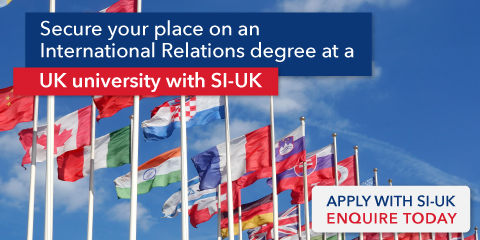
The subject will show you how the world works and how power structures are made, unmade, exploited and resisted. It is therefore an excellent preparation for a career in civil service, politics and diplomacy. International relations modules will include political analysis, global histories, war and security in politics, social divisions and global governance.
Careers in International Relations
International relations graduates will be equipped with the skills needed to unravel the complex network of factors that cause events in one part of the globe to have unlikely consequences in another. As such, roles in research, journalism, social policy or development, and different branches of politics are all popular avenues for graduates to pursue.
International Relations UK Entry Requirements
- Typical International Baccalaureate requirements: 32 points.
- Typical A-level requirements: ABB.
- Typical IELTS requirements: 6.5 overall, with no lower than 6.0 in any one component.
Please note that entry requirements vary for each UK university.
Where can I study International Relations in the UK?
To learn more about the best international relations courses in the UK, find details on the top ten ranking International Relations universities in the Guardian University Guide 2024 below:
- University of St Andrews
- University of Glasgow
- London School of Economics
- King’s College London
- Loughborough University
- University of Warwick
- University of Aberdeen
- University of Sheffield
- Keele University
- Aston University
Study International Relations in the UK
If you are interested in studying International Relations in the UK, arrange your free consultation today. Don't forget the Premium Service will guarantee you at least one offer from a UK university.
Popular Courses
News
Studying in the UK
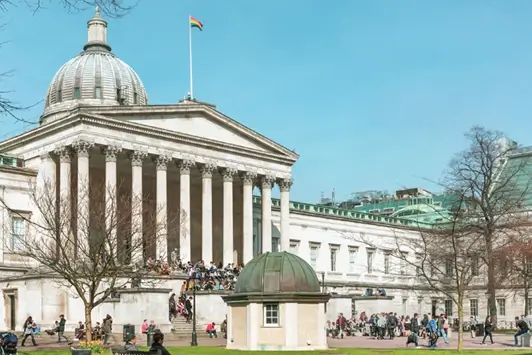


My consultant was very helpful and motivating. She helped me every step of the way, even when the deadline was so close. I feel I could not have done it without her. I'd highly recommend this service to any and all of my many friends interested.
Brishti Basu Biosciences at Coventry University
Leading Universities and SI-UK Partners









.jpg)
